
Background
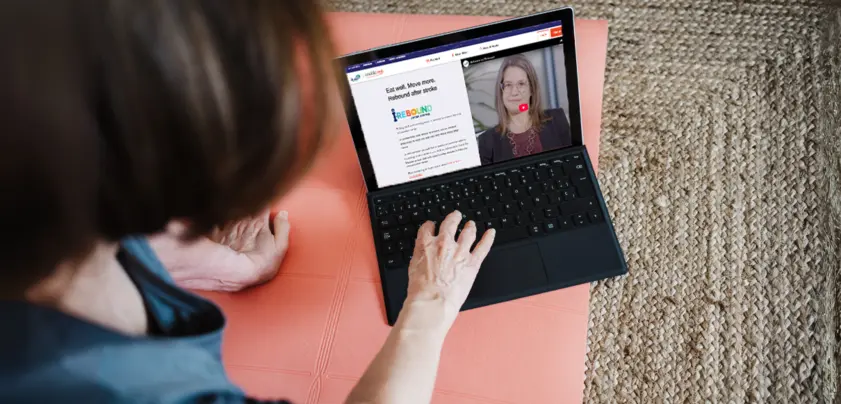
A world-first website featuring evidence-based resources to help people living with stroke move more and eat well to reduce the risk of a second stroke has reached 25,000 people since its launch on 7 November 2022.
i-REBOUND connects survivors of stroke to fit-for-purpose resources via the internet.
The project was developed to meet the diet and exercise support gap that stroke survivors reported after they were discharged from hospital.
It also helps meet the needs of people in regional and rural areas where allied health support can be hard to access.
This is a critical factor because regional and rural Australians are 17% more likely to have a stroke than their metropolitan counterparts.

The Challenge
- Regional and rurally-located people living with stroke don’t have access to allied health support services
- No easily accessible, online supports designed for and by stroke survivors
- Increased risk of secondary stroke if post-stroke exercise and diet guidelines aren’t met
The Solution
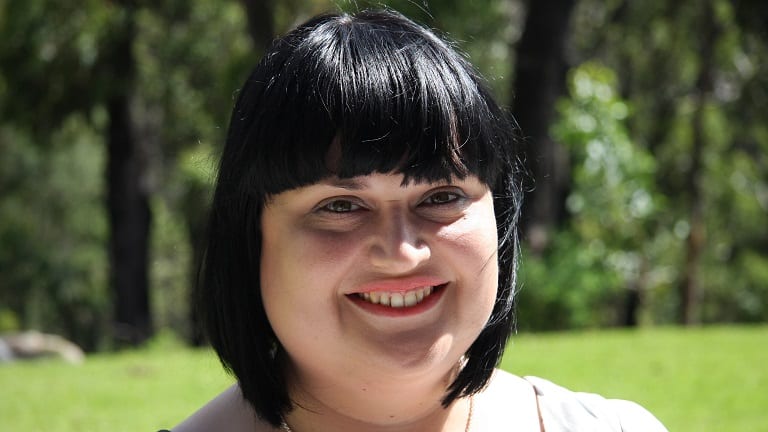
i-REBOUND lead, University of Newcastle researcher Professor Coralie English from the Heart and Stroke Research Program, says, “We know that poor diet and inactivity are strong risk factors for stroke and recurrent stroke but there was no support for people when they left hospital. We wanted to change that,” says Professor English.

The i-REBOUND website, funded by The Nancy and Vic Allen Stroke Prevention Memorial Grant took 18 months to develop, and was created in close partnership and consultation with stroke survivors. The people in the videos on the site are stroke survivors and the hints and tips they deliver are rooted in lived experience.
Impact
Stroke survivor Brian Beh says, “As a stroke survivor, i-REBOUND is an excellent example of the power of collaboration across the broad vista of the stroke landscape.
“i-REBOUND provides relevant information on several key elements in after stroke living – dietary tips, exercise routines and insights into the personal and social challenges that are encountered by survivors living with stroke.
“The success of i-REBOUND was underpinned by the sage and strategic leadership of Coralie English, who led a group of bolschy, committed, and opinionated stroke survivors, stroke researchers, and clinicians.
“The messages on the i-REBOUND website feature actual stroke survivors, in an often brutally honest manner – that is why I use it. stroke survivors can see themselves when they visit the site,” says Brian.
The i-REBOUND website has 23,946 users in 102 countries and features 175+ recipes, exercises, and resources tailored for stroke survivors.
Next Steps
Professor English and her team are hoping to progress the program.
She says, “We are really needing another injection of funds to help us take it to next level of structured, modulised education /self-management product, and to find sustainable ways to refresh content going forward. We are part of bid lead by HMRI to work on developing it into a more comprehensive secondary prevention platform.”
Check out the i-REBOUND website here.