
When Jules Kirkpatrick ran out for her first NRLW pre-season trial game with the Newcastle Knights in 2023, she never expected it would end with a ruptured Anterior Cruciate Ligament (ACL) and a year-long road to recovery.
“I just stepped off my right foot and I felt like my kneecap just kind of went in and out,” she said. “I was a bit confused and then went down in a tackle, got up slowly, played the ball and it felt something was wrong, but I didn’t know what.”
“I did get strapped back up, I was running, and it felt fine. It wasn’t until I did a lateral shuffle and my knee felt like it just kept giving way.”
Her season was over before it had started. What followed was a tough period of physical and mental adjustment.
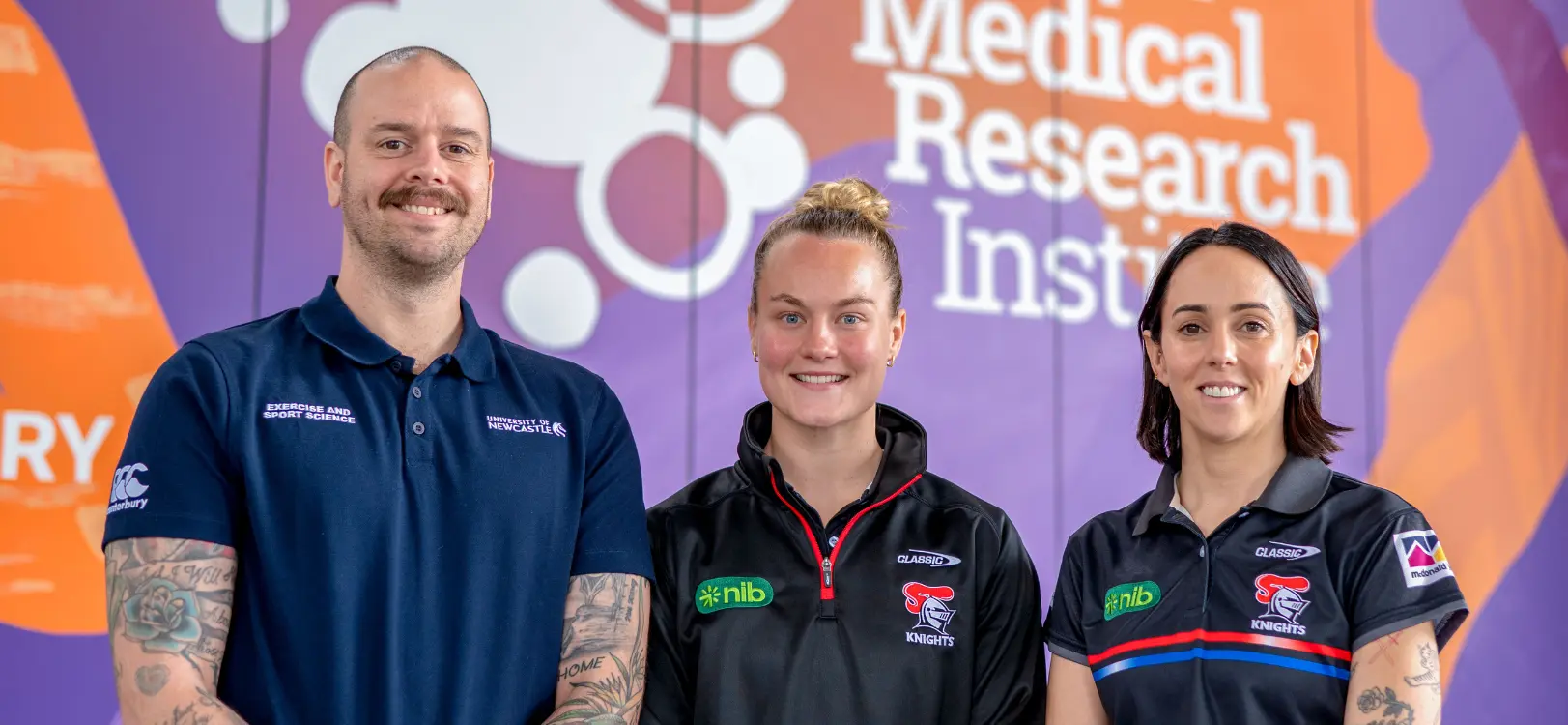
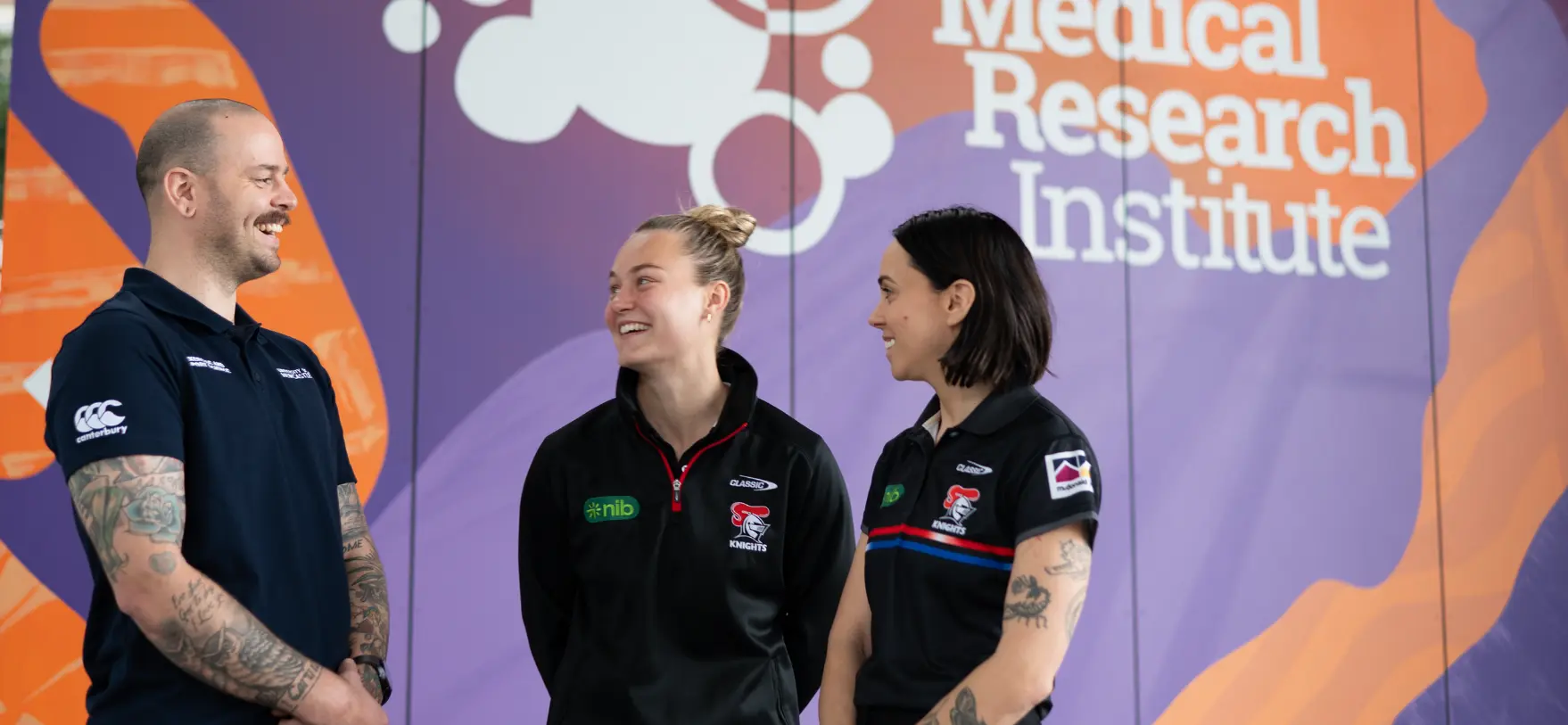
Kirkpatrick’s recovery was supported from the outset by the club, including the Knights’ NRLW Performance Manager Erin Wilson.
Jules undertook a month of prehabilitation before surgery. It was a move HMRI Active Living & Learning Researcher and University of Newcastle lecturer Benji Dutaillis says was crucial.
“The fact that Jules did pre-operative training is probably one of the best things she could have done,” he said. “We know there’s quite strong links with pre-operative strength and muscle size measures with how you go post-operatively.”
Kirkpatrick’s surgical procedure involved a hamstring graft and a lateral tenodesis.
Dutaillis, who has worked with elite athletes including AFLW players, said that specific treatment combination can often lead to a slower start post-surgery, but pays off long term.
“We see that slow take off really commonly with the lateral tenodesis,” he said. “It’s often just that little bit sorer, that little bit stiffer, but then you really hit the ground running.”
That was the case for Kirkpatrick who spent a full 12 months in recovery.
Rehab didn’t just bring Kirkpatrick back physically, it reshaped her approach to training and competition.
“I take warm-up very seriously now, just making sure all your muscles are warmed up, especially around the knee,” she said. “Through my rehab process we really focused on my technique of stepping.”
Initially, confidence didn’t come easy.
“When I got to the running stage and then stepping, even just jumping, I was second guessing myself a little bit,” she said. “But once you know it’s fine and all ticked off in training, I knew when it was game time that I was fully ready to go.”
ACL injuries are disproportionately affecting young women.
“Young women under 25 are by far the highest growth group amongst any sex and age, and a lot higher than males in that age group,” he said. “Not just in sports but across the board.”
Why this is happening remains unclear.
“I don’t think it’s just biological,” Dutaillis said. “I think there’s a lot to do with environment and social factors, particularly when it comes to the rise of female sport over the last 10 years. A lot of sporting pathways are still developing, or people have been pulled in from other sports where they haven’t had the exposure to high-speed, multidirectional change of direction.”
Biomechanically, he explains, it’s more complex than just poor technique and is likely a combination of modifiable factors that lead to increased ACL injury risk.
“Knee valgus is part of it, there is also the internal rotation and anterior tibial translation of the tibia,” he said. “It’s the combination of all three that cause the highest ACL load. That combination is the straw that breaks the camel’s back.”
Even well-established injury prevention programs like FIFA 11+, while effective, still raise questions.
“They reduce injury rates in female athletes by 50%,” Dutaillis said. “But for some reason, they don’t change biomechanics at all. So they’re effective, but we don’t know why.”
These programs, typically incorporating strength, balance and plyometric training, have shown the most promise in community-level athletes.
For Kirkpatrick, her injury has been both a setback and a source of personal growth.
“You learn patience and that injuries like this happen,” she said.
The 22-year-old made her long-awaited NRLW debut for Newcastle in this season’s opening round against the Canterbury-Bankstown Bulldogs and has featured in every match since.
As researchers like Benji Dutaillis aim understand more about risk factors and prevention of ACL injuries in elite female athletes, Jules’ experience is an important reminder of what is possible with the right support and mindset.
HMRI will be the Newcastle Knights game day 50-50 Charity Raffle partner for this Sunday’s NRLW and NRL double-header against the Brisbane Broncos at McDonald Jones Stadium: https://5050charityraffle.com.au/knights