
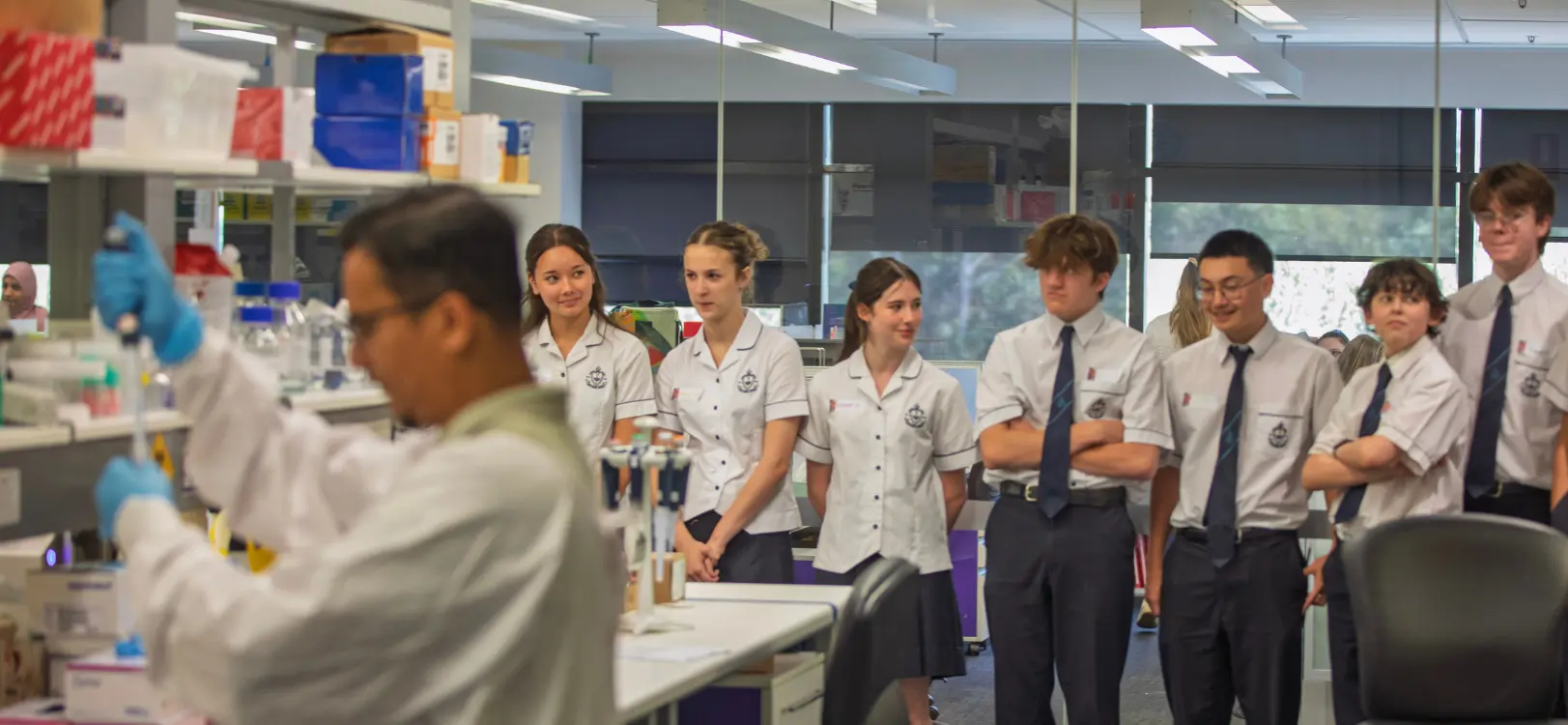
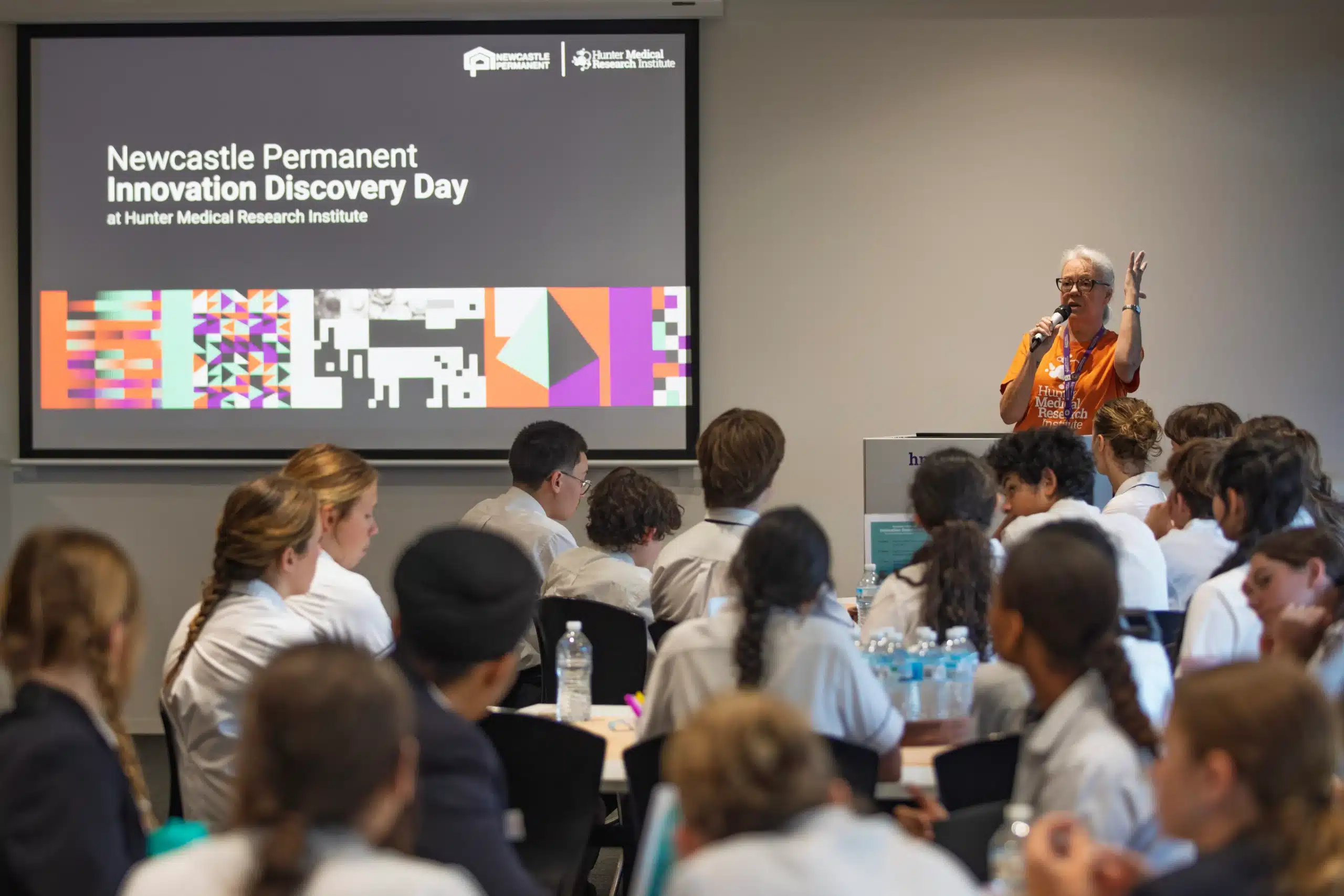
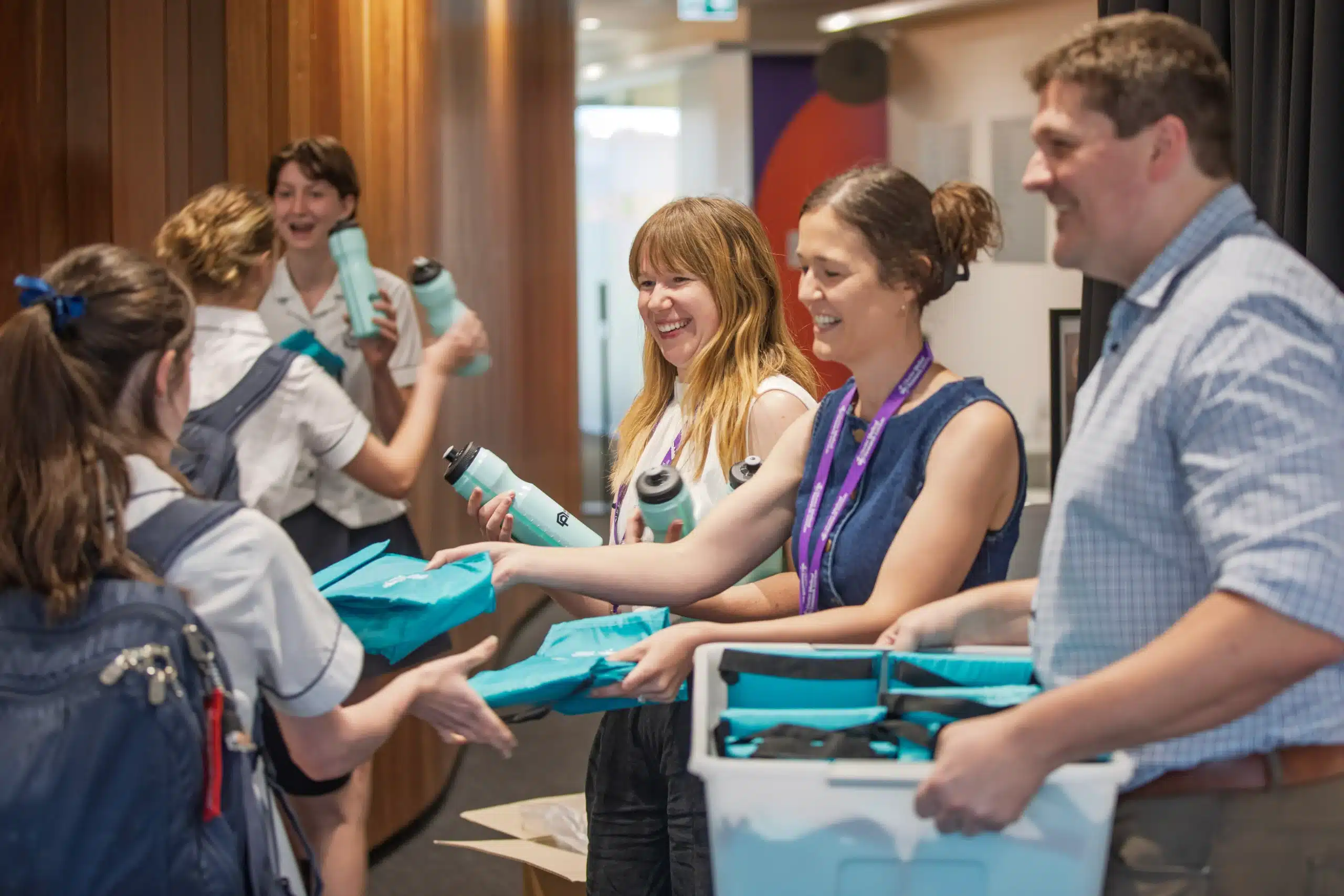
This week the Hunter Medical Research Institute (HMRI) opened its doors to the next generation of health innovators. Year 10 and 11 students from Macquarie College, Cessnock High School and Newcastle Grammar joined HMRI for the Newcastle Permanent Innovation Discovery Day, exploring laboratories, hearing about the latest research and designing their own experiments.
The Innovation Discovery Day was delivered though Newcastle Permanent’s $2 million partnership with HMRI and was designed to inspire the next generation of scientists, clinicians and researchers. Students were given access to state-of-the-art facilities and were guided by researchers from HMRI, the University of Newcastle and Hunter New England Local Health District. Across the day they worked in small groups, toured laboratories and gained a close look at the groundbreaking research taking place at HMRI.


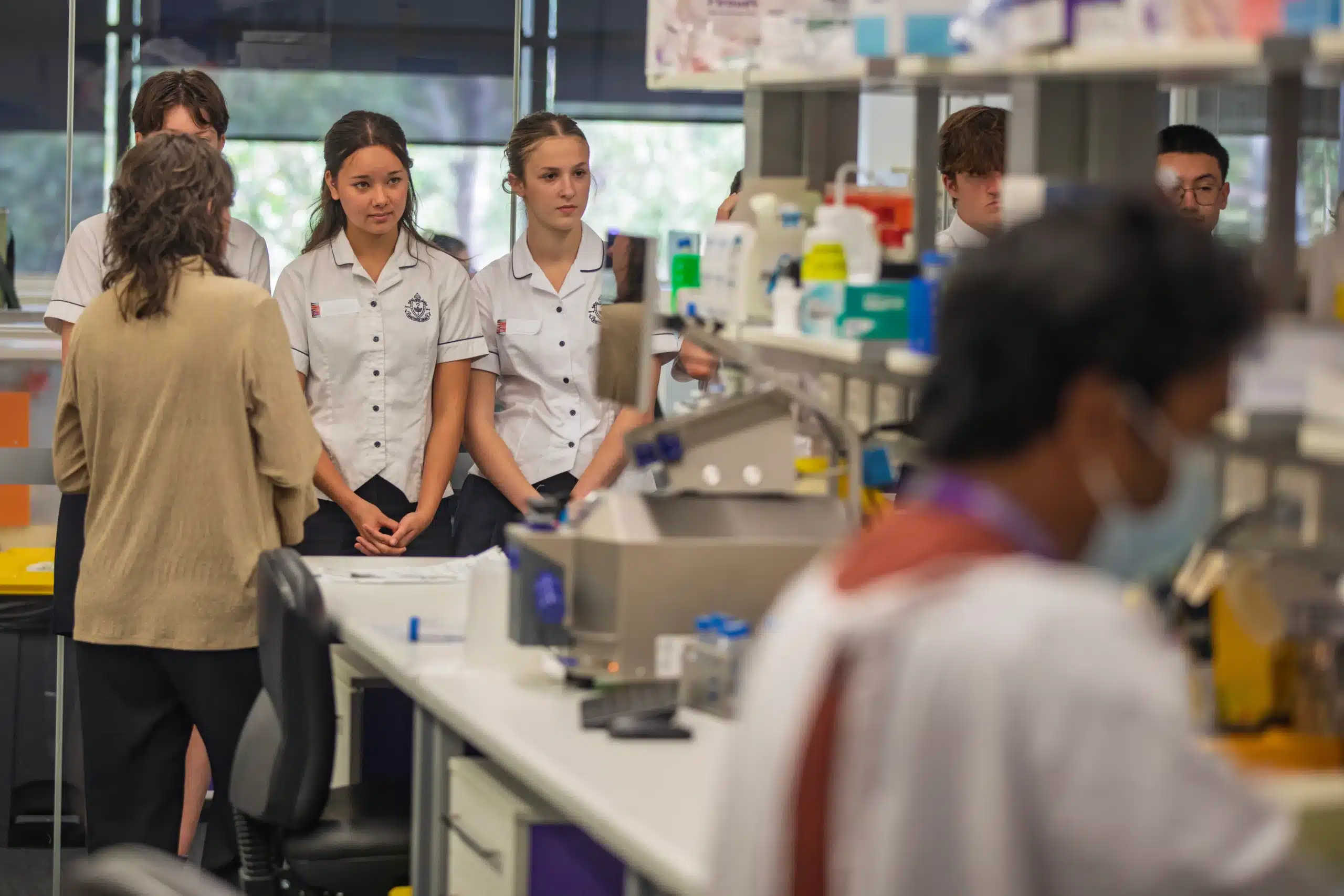

Year 10 Cessnock High School student Olivia Lopez said the chance to step inside a the lab was one of the most memorable parts of the day.
“I was looking forward to seeing how scientists figure out how different drugs kill cancer cells and how they can develop that technology,” Olivia said. “It’s been really cool seeing the amount of technology they have, and seeing how they’ve figured out just by testing cells, these microscopic little things can cause so much damage.”
After finishing school, Olivia hopes pursue a career as a mortician and enjoys the medical side of STEM.
“I also do kind of want to go to uni for something in STEM. I just really like learning about human anatomy,” she said.
“I like science and doing dissections mainly, because I get to see how specific organs and stuff actually work, and I’m able to see the inside of them.”
HMRI Public Engagement Lead Carol Duncan said students like Olivia represent exactly why the Innovation Discovery Day is so valuable.

“These brilliant young minds spent the day immersed in the life of a researcher and seeing what we do and what’s possible at HMRI. It’s a great example of our long-standing partnership with the Newcastle Permanent in action,” she said.
Ms Duncan said strengthening STEM skills is important for young people and for the future health of regional communities.
“Science, technology, engineering and mathematics are essential for future scientists and researchers. STEM skills are going to be vital in solving tomorrow’s biggest health challenges like dementia,” she said. “The Innovation Discovery Day gave these students a chance to see how what they’re learning now can make a real impact in the future and by encouraging them to build STEM skills early, we’re investing in that future.”
She said the initiative also helped students understand the diversity of roles within medical research.
“The event was designed to encourage curiosity and creativity in STEM and to help students imagine what a career in medical research could look like for them, because it’s not all labs and white lab coats!”
“We have amazing people who work with the data that comes back from research and help understand what it all means. We have people who work in the HMRI Imaging Centre, data scientists, pathologists, technicians, even people who keep equipment clean and sterile.”
Throughout the day students toured laboratories, explored the fields of histology and cardio-oncology, took part in Q&A sessions, and heard from expert researchers about the different pathways they took in their scientific careers.
By the end of the day, the students had even designed their own medical research experiments, including using brain imaging to determine whether the use of AI impacts our problem-solving abilities, testing the effectiveness of emu oil as a treatment for arthritis, and determining the differences in lung function between people who vape and people who don’t.
“It was a real window into the world-class research happening right here in the Hunter, and proof that you don’t have to leave your hometown to make a global impact,” Ms Duncan said.
The Newcastle Permanent Innovation Discovery Day at HMRI is planned to be run again in 2026.