

A creative new study is helping young children with cancer and their families open up about their experiences, offering insight into how care can better meet their needs.
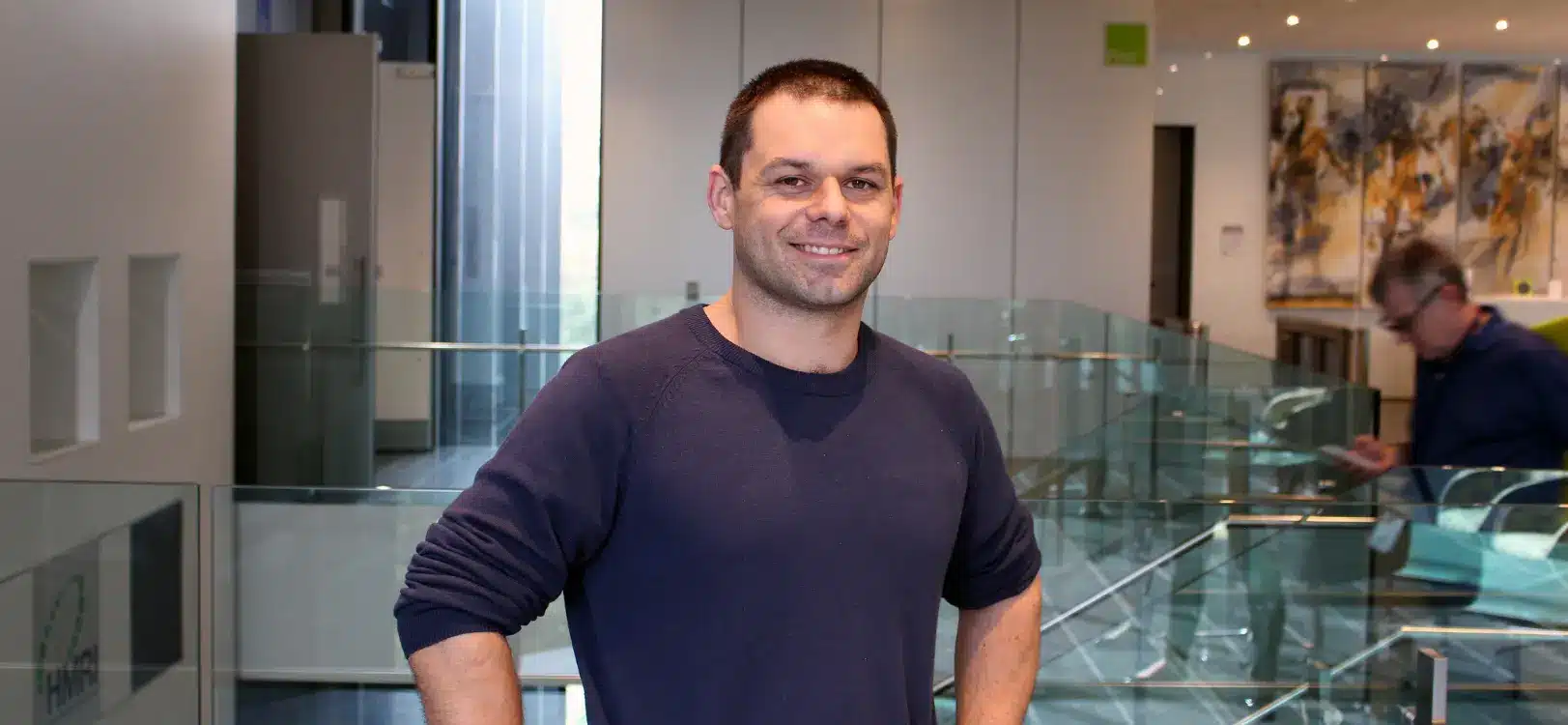
Led by Dr Jamie Bryant from the University of Newcastle and Hunter Medical Research Institute’s (HMRI) Equity in Health and Wellbeing research program, the Assessment to Action: Pioneering needs-based assessment in paediatric oncology study aims to develop new ways for children with cancer and their parents to tell healthcare providers what support they really need.
“Every year in Australia, more than 700 families are told their child has cancer,” Dr Bryant said.
Despite advances in treatment, there is currently no standard tool for children under 14 or their parents to report any unmet needs in their care. It is a challenge that hits close to home for Dr Bryant, whose nine-year-old daughter Eden lives with cancer.
“Right now, we don’t have any tools that allow younger children with cancer or their parents to tell us directly about what support they’re missing. Things like emotional health, practical support, or information they didn’t get,” Dr Bryant said.
“Our research aims to fill that gap and make sure those children and families feel supported through diagnosis, treatment and life beyond cancer.”
The study uses innovative, child-friendly techniques to gather feedback. One method is a simple interview, another is an arts-based process known as body mapping.
“In our research, children will be invited to talk with a researcher, or they can do something called body mapping where they trace a life-size outline of their body on a big piece of paper and they fill it with colours, shapes, symbols and words to tell us about what they’ve been going through,” Dr Bryant explained.
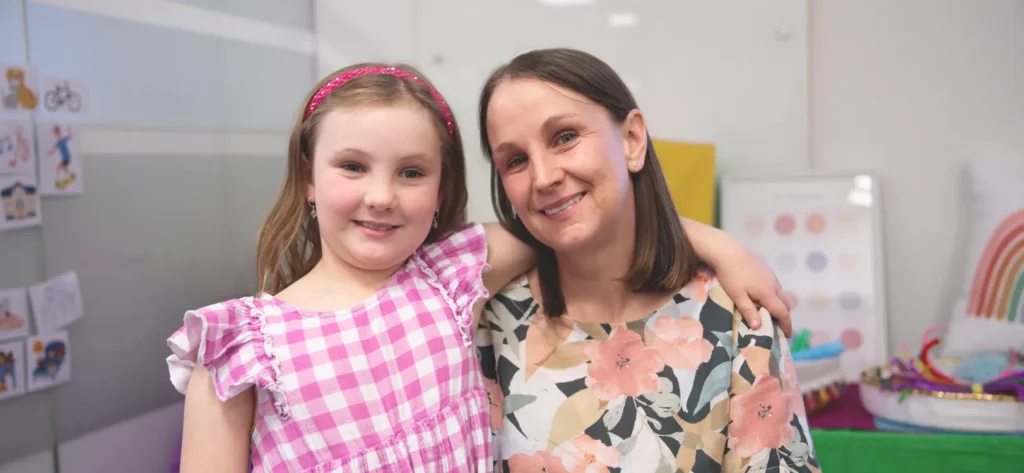
Eden, who has been having treatment since she was three, participated in a body mapping session.
“We traced an outline of my body and I thought about what I think needs to improve and what’s good already” Eden said. “You can draw stuff, glue stuff, colour in with crayons or pencils, and it was really fun.”
Her artwork included the word “ouchies” written on her arms and hands, representing the discomfort of frequent needles and cannulas. The hope is that this information could be used by her doctors to make Eden’s next experience more comfortable.
Contributions by kids like Eden are an essential part of the project’s co-design approach, which ensures children and families are at the centre of the research.
“I feel proud of Mum for doing this and I feel grateful that I’m a part of this process to help them discover what they can do to make things better,” Eden said.
The project will use body mapping and semi-structured interviews with children, parents and healthcare professionals to inform the development of two new tools, one for children aged eight to 14 and one for their parents. These tools will allow families to communicate their unmet needs clearly and systematically, helping to tailor care to their individual situations.
“Families going through childhood cancer are incredibly resilient, but they face a lot of challenges,” Dr Bryant said. “Kids can feel anxious, overwhelmed and scared, but often don’t know how to tell us about this. As a parent of a child with cancer, I know how important it is for children to be able to share their voices and experiences.”
The research is being supported by the Hunter Children’s Research Foundation and the Cancer Institute NSW through the NSW Cancer Regional Research Network.
“We have incredible healthcare teams here in the Hunter to support children diagnosed with cancer and their families,” Dr Bryant said. “Our research aims to support them by providing a way for children and families to share their experiences so care can be personalised.”
By giving children a voice in their care journey, sometimes with conversations and sometimes with crayons, this project hopes to make a lasting difference for families like Dr Bryant and Eden’s, both in the Hunter and across the country.
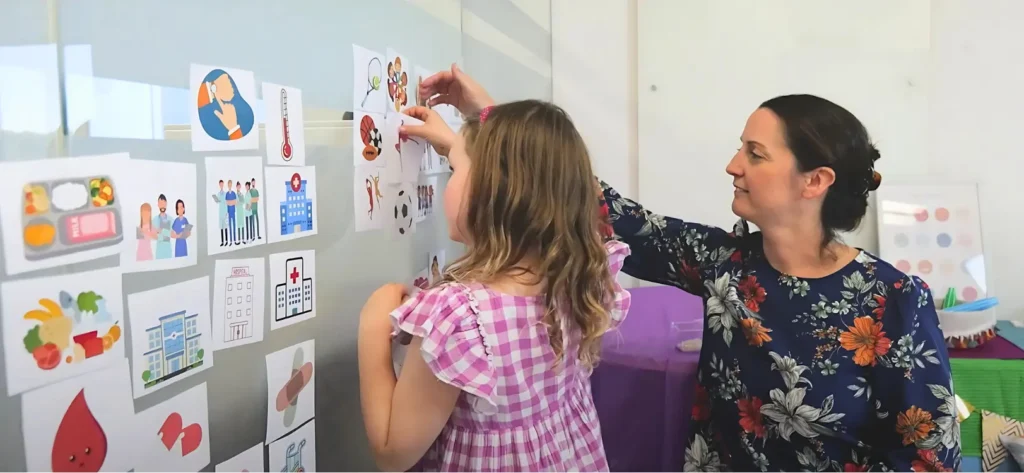
Body mapping is an expressive therapeutic technique that invites children to create a visual representation of their body, often through drawing, painting, or collage on a life-sized outline. Instead of focusing only on words, children can use colours, symbols, textures, and images to express what they are experiencing inside and outside their body.
It becomes a “map” that shows where feelings, memories, or sensations live, giving both the child, their family and health care professionals a powerful tool for reflection and discussion.
Children often communicate more naturally through play and creativity than through verbal conversation. Body mapping allows them to: