
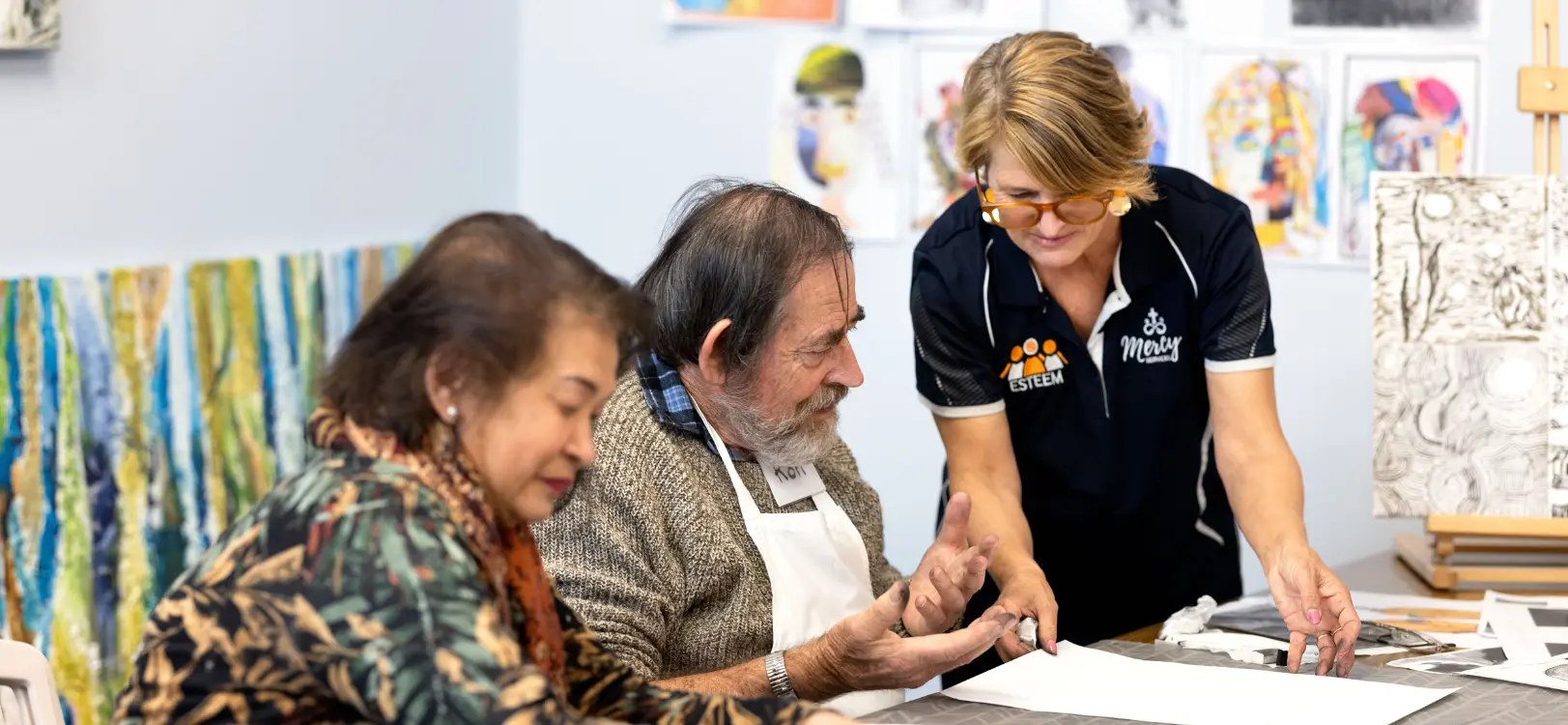
Presented by HIC Services, Art for Impact is an event that brings together local artists and leading researchers to champion vital medical research while highlighting the deep connection between art and science.
Researchers at HMRI are also harnessing this connection to aid in the recovery of stroke patients.
When Lynette Walker had a stroke two years ago, she lost more than just mobility and speech. She lost her confidence and sense of self. Like many stroke survivors, she struggled to reconcile her previous capabilities with her new reality.
Yet today, Lyn speaks with warmth about the unexpected joy of creating art alongside others who understand her journey.
“You get charcoal all over yourself and up your arms and all over your clothes, you come away laughing because it’s so enjoyable. I hadn’t had so much fun since I was a kid. It has helped me in so many ways,” says Lyn.
Her story is one of many emerging from the ESTEEM After Stroke Research trial’s evaluation of the ESTEEM Program, a pioneering program challenging conventional approaches to stroke recovery.
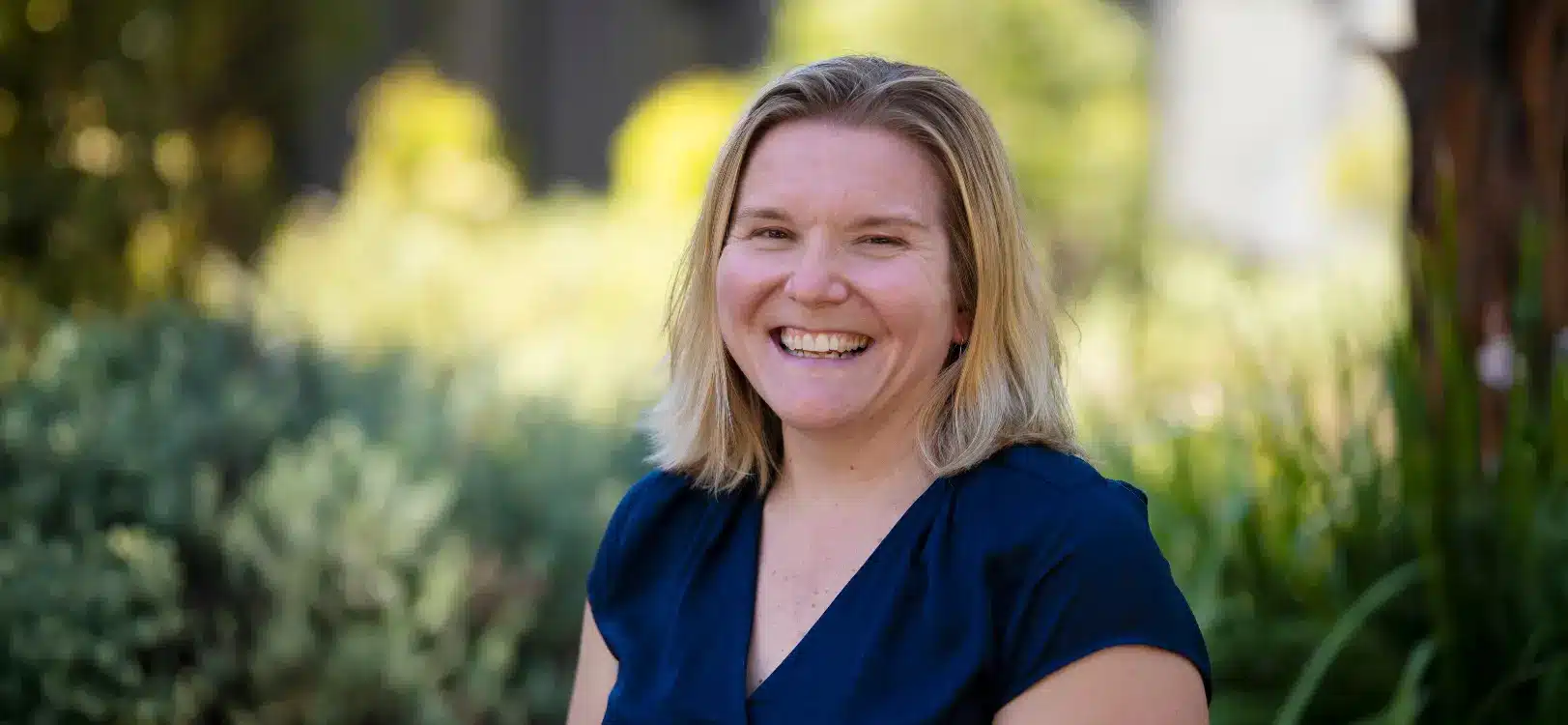
University of Newcastle and HMRI researcher Dr Heidi Janssen, the clinical researcher and physiotherapist leading the trial, co-developed the ESTEEM Program in collaboration with stroke survivors, carers, creatives and health professionals. The program builds on the principles of environmental enrichment, which experimental models have shown can improve brain recovery after stroke. The ESTEEM Program is comprised of 30 minutes of exercise, 30 minutes of socialisation, and 90 minutes of either movement to music or art classes, twice weekly for 10 weeks.
“We’re hoping to drive cognitive stimulation through play, novelty, and just having fun, trying something different,” says Dr Janssen.
“The application of art in this model is used in conjunction with the exercise, and socialisation. It’s the combination of these three elements that’s thought to help the brain become more plastic, to be ‘moulded’. This is important because to relearn lost skills and/or learn new things after stroke, the brain needs to be able to adapt and rewire.”
What makes the art sessions particularly powerful is their departure from traditional rehabilitation. Conventional therapy can at times place a large focus on what the stroke survivor cannot do, what they need or want to regain. In contrast, the ESTEEM Program and activities it offers, exercising, socializing and doing art and dance, celebrates what participants can achieve. The ethos of the Program and the message from staff leading it, is that there is no right or wrong, only freedom to connect, explore and discover.
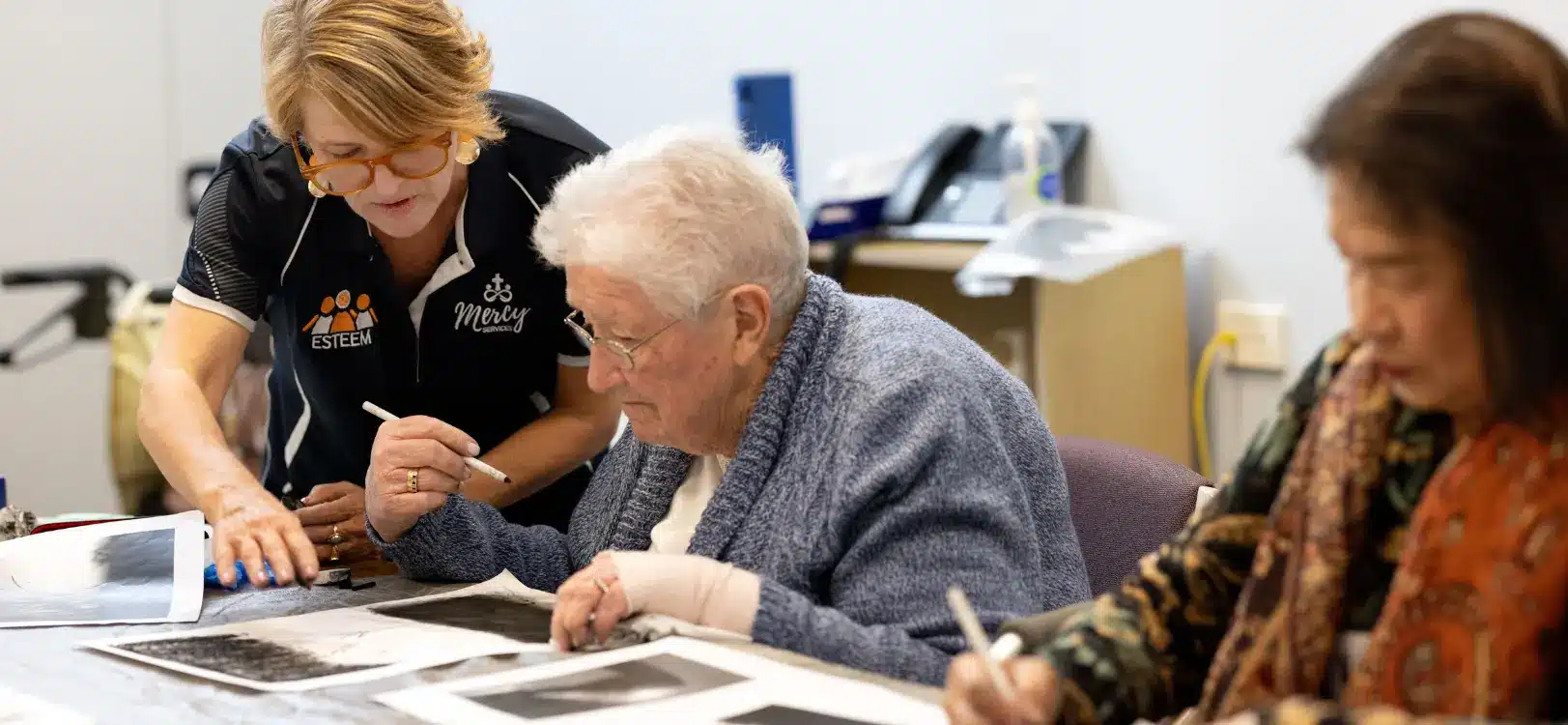
Deanne Newland, the creative arts officer who facilitates sessions, has witnessed how transformative art can be for the participants. Most participants arrive having not created art since school, yet within weeks become absorbed in their work, finding their “inner artist”.
“It’s not about creating a masterpiece, it’s about creating. It’s about the whole creative process,” Deanne says.
“It’s amazing what it does for people’s confidence. I had one lady tell me, ‘I’ve become an artist after my stoke’, and I just thought that was really beautiful”.
Beyond artistic skills, the sessions provide other crucial benefits. Hand-eye coordination improves; fine motor skills strengthen and it provides a unique opportunity for self-expression.
The ESTEEM Program art classes also provide a time of mindfulness for the participants as they fully focus on the art piece that is in front of them.
“Art is like meditation because it’s a very mindful. They’re focusing more on what they’re doing and that therefore it’s very stress relieving,” says Deanne.
Perhaps most significantly for Lyn, the program fostered genuine community.
“It’s the camaraderie that you get from people in the same boat as you. We can talk about what we are going through and we really understand each other,” Lyn says.
While science underpins the ESTEEM Program, it is the healing power of art and the human connections that make it work.
Click here to get involved in this year’s Art for Impact events and help raise funds for life changing projects like ESTEEM.