
A new project at HMRI is reimagining what it means to make health research feel safe, familiar and welcoming for Aboriginal and Torres Strait Islander young people.
Deadly Images, four years in development, has its origins in a simple but persistent gap noticed by its founders. Dr Jennifer Rumbel and Dr Guy Cameron, both Indigenous Research Fellows at HMRI, arrived in 2022 and quickly recognised that very few young Aboriginal people were engaging with research. The MRI scanner itself, loud, enclosed and clinical, was part of the problem.
“It’s the difference between being welcome somewhere and feeling very excluded,” says Dr Rumbel of the importance of cultural safety in research settings. For many Aboriginal people, medical research institutes carry the weight of a difficult history, one in which research has too often been done on Indigenous communities rather than with them.
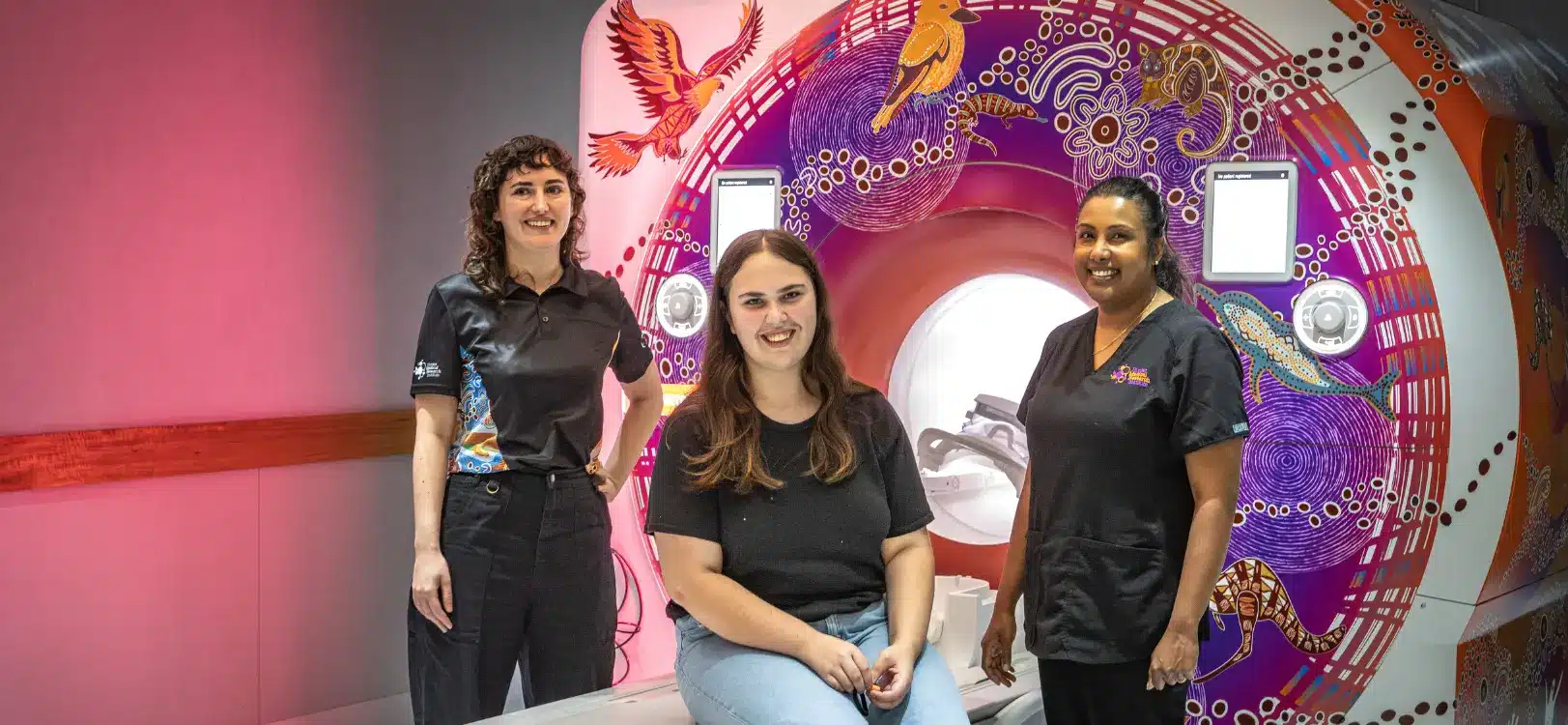
The project’s response was to transform the scanning experience itself. Working with members of the Wollotuka Institute from the University of Newcastle, the team developed cultural multimedia content, to be played for young participants inside the scanner. The aim, as Dr Cameron explains, is to take “what is a clinical and scary environment for some people” and turn it into “a nicer space to be.”
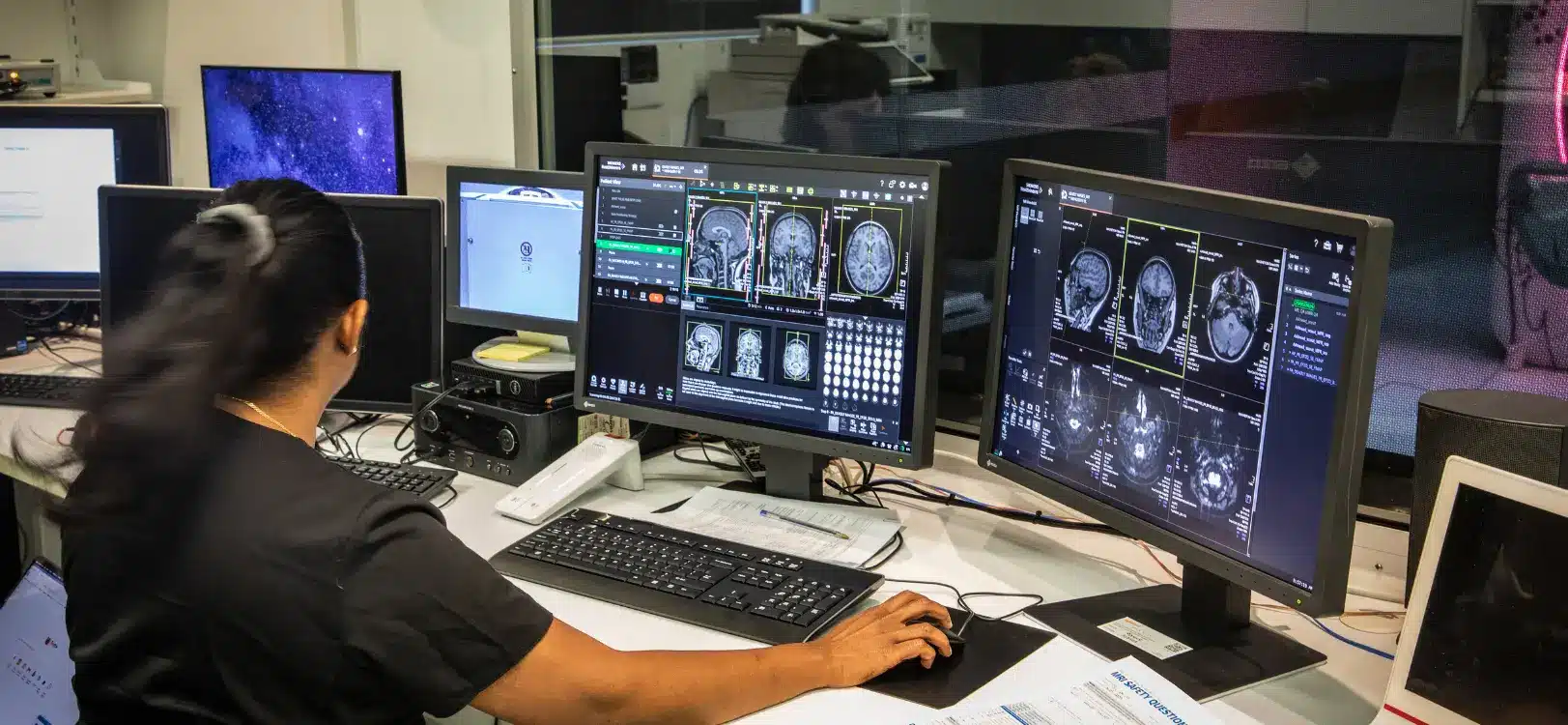
That care extends well beyond the scanner room. Each two-hour appointment is built around relationship and trust as much as data collection. Participants are welcomed for a yarn and a cup of tea before the 45-minute scan, supported throughout by Indigenous Imaging Fellow Lillian Langford, who accompanies young people and their carers into the machine itself. Afterwards, participants are invited behind the console to see their own brain scans, a moment Dr Rumbel describes as “pretty cool” in its own right.
The name Deadly Images reflects this same spirit. The Aboriginal term, “deadly” means awesome or great, a deliberately positive framing for a project built on consultation and co-design rather than research done to communities from the outside.
“I think it’s important to have Indigenous voices in research because the research is already being done on Indigenous people. It’s being done historically by not Indigenous First Nations people. And if we’re not a part of that work, then we’re not going to be adequately represented when the research comes to translation, to having those translatable benefits coming back to patients,” Dr Cameron says.
Now in its pilot phase, the project’s first cohort of participants has already come through, described by Dr Rumbel as “very, very exciting after all this time of preparation.” Early data and feedback will help shape what comes next, with the team open to the possibility that what young people consider culturally appropriate may differ from initial assumptions, and that further projects may grow out of this first one.
If you know a young Aboriginal or Torres Strait Islander person who might like to take part, or you’d simply like to find out more, get in touch with the team.
Contact:
Dr Jennifer Rumbel: [email protected], 4055 3010
or Lillian Langford [email protected],
or [email protected].