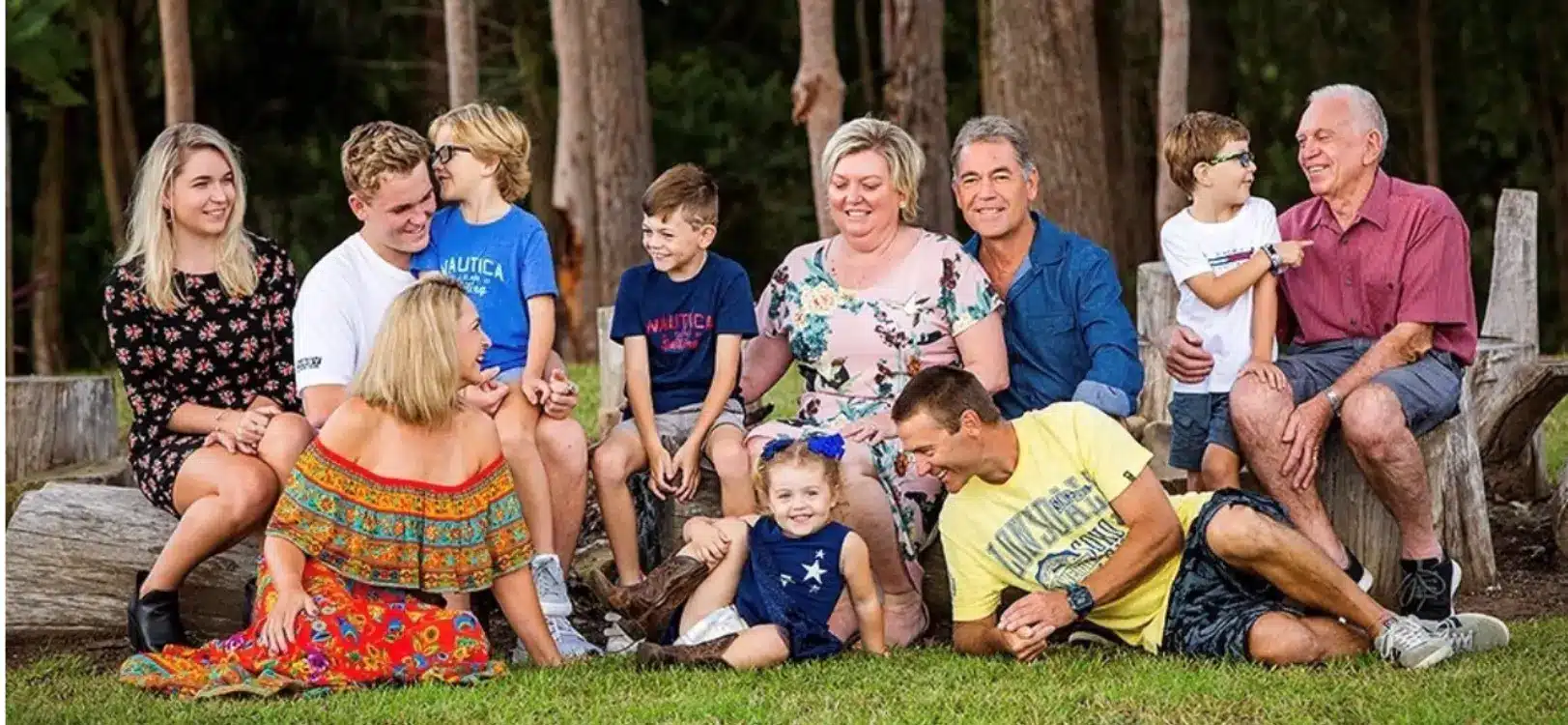
For 57-year-old Hunter Valley man Noel Sweetman, medical research has meant the difference between life on a dialysis machine and a future where his family could break the cycle of an inherited disease. In one lifetime, advances in transplantation, genetic testing and assisted reproductive technology have helped make that future possible.
In the 1990s, Noel was living a typical active life. He worked, helped his wife Natalie raise their two kids, and loved playing sport. But around the time he turned 30, he started experiencing persistent headaches and fatigue. After seeing his doctor, he went through round after round of tests and biopsies before the diagnosis was revealed.
Noel had Alport syndrome, an inherited renal disease caused by mutated genes on the X chromosome that can cause progressive kidney damage, and ultimately kidney failure.
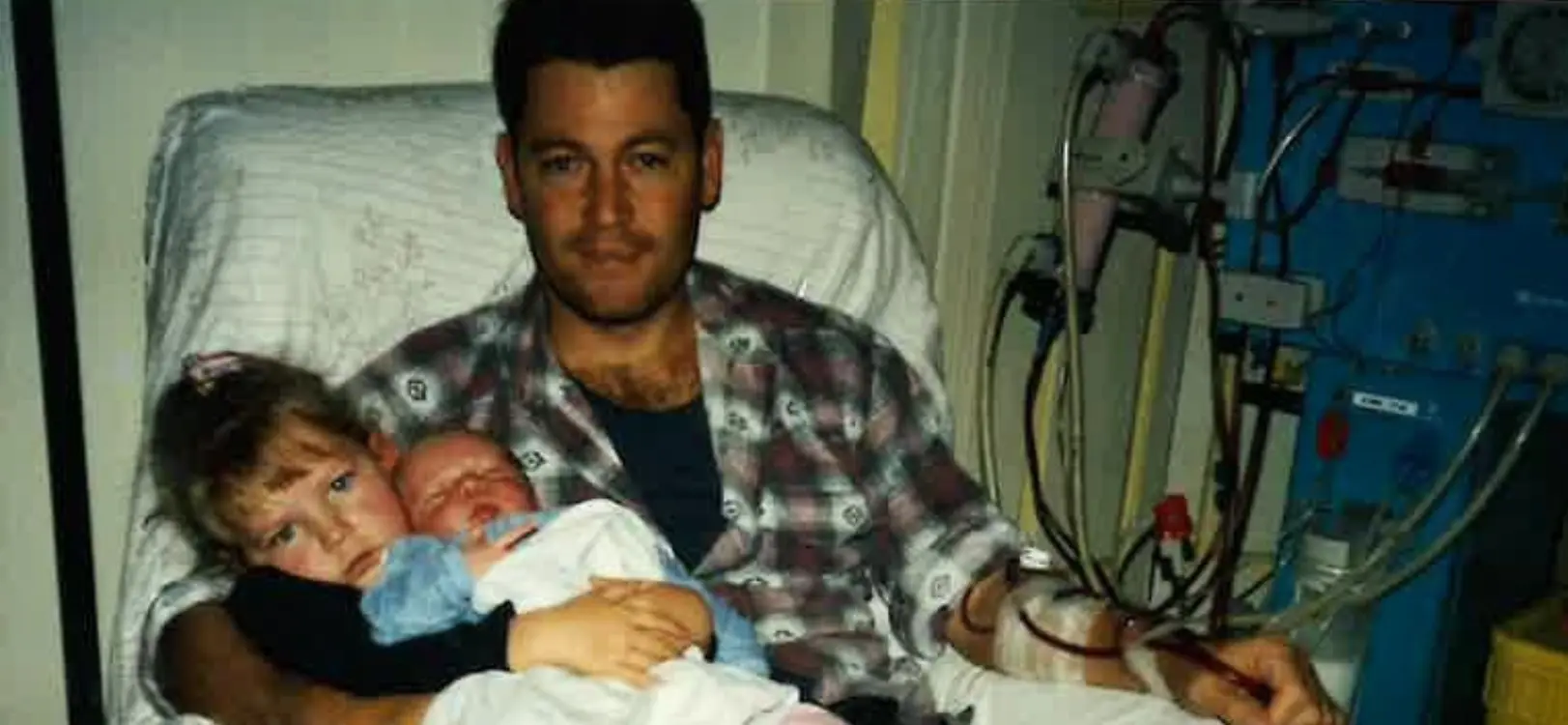
He would finish work and then go for treatment, spending up to eight hours connected to a dialysis machine, before driving home around midnight. The next morning, he would be up again by six o’clock to do it all again.
“I spent the better part of 7,000 hours on a machine that kept me alive,” Noel said
The condition and relentless grind of treatment had an impact on the entire Sweetman family as they tried to navigate the uncertainty.
“It affects the whole family, not just the person,” Noel said.
But a major turning point came in 2005 when Noel’s cousin, Julie, offered to donate one of her kidneys.
“She gave me the gift of life and I wouldn’t be here without it,” Noel said.
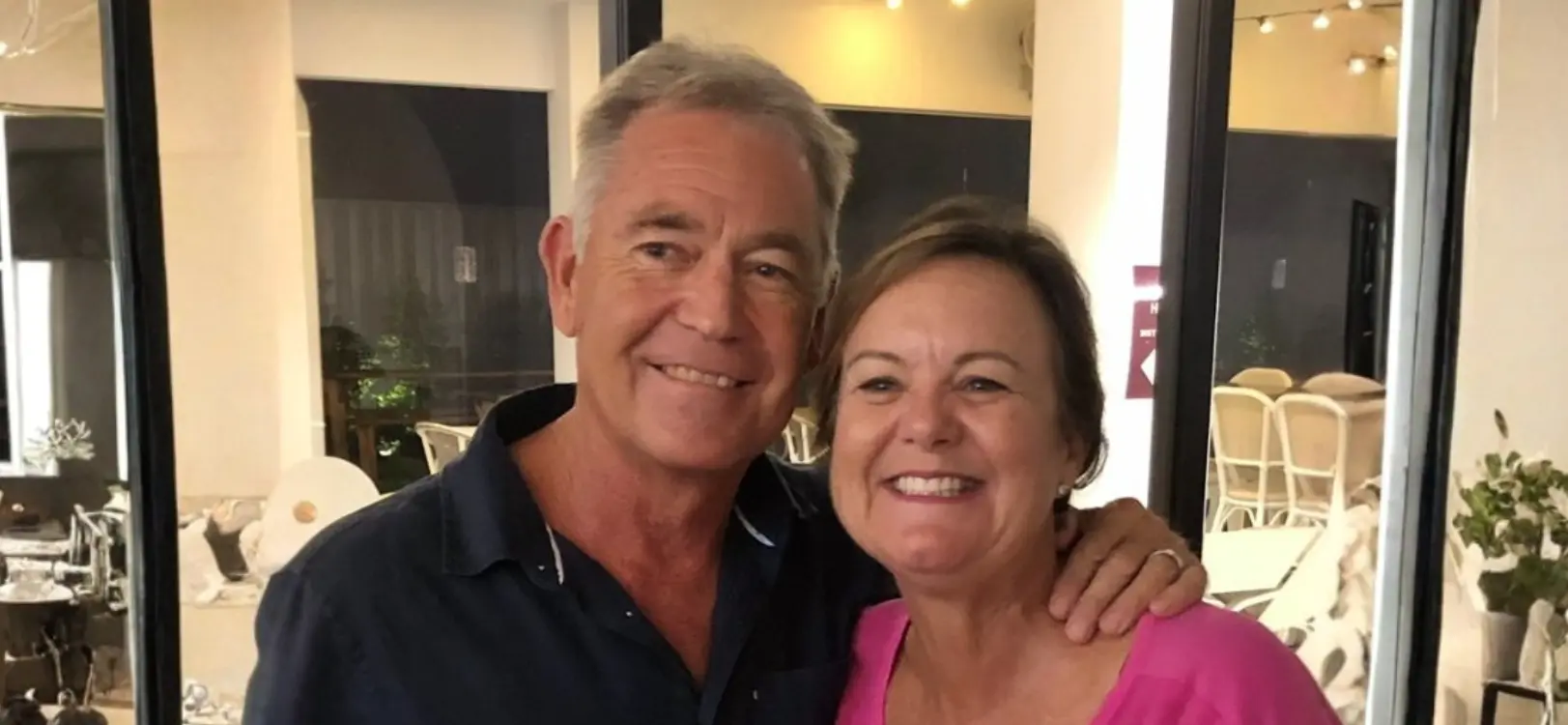
At just 36, Noel underwent his second kidney transplant, after his body rejected an earlier one. But Julie’s kidney was almost the perfect match, and the operation was successfully performed in the John Hunter Hospital’s Newcastle Transplant Unit, with support from the Hunter Transplant Research Foundation (HTRF). HMRI Immune Health researcher, Dr Munish Heer, who is Director of the John Hunter Hospital’s Renal Transplant Unit led a follow up surgery in 2019 to improve the function of the donated kidney.
“I can’t thank my transplant team and the specialists I’ve seen through the years enough for everything they’ve done. There were so many moments when they went above and beyond to help us,” Noel said.
Noel had been given a new lease on life, but Alport syndrome was unfortunately still a part of the Sweetman family’s story.
Genetic testing revealed Noel’s daughter, Madeline, had inherited the gene responsible for the condition. While she had not developed the same kidney disease as her father, she faced the possibility of passing the genetic mutation on to her own children.
When Madeline and her husband, Bradley, started thinking about having kids, they faced a difficult decision. They wanted to give their child the best possible chance of growing up without the disease Madeline had watched her father battle.
With the help of specialists, the family explored their options. Staff specialist nephrologist Dr Thida Myint at John Hunter Hospital referred Noel to Dr Anne Ronan at Newcastle Medical Genetics, where genetic testing helped identify the mutation responsible for Alport syndrome. Madeline was then referred to infertility specialist Dr Myvanwy McIlveen at Genea.
Advances in medical research offered Madeline new possibilities. Through in vitro fertilisation (IVF), embryos could be created and tested for the genetic mutation responsible for Alport syndrome.
After 18 months of genetic testing, the couple had two embryos identified as free of the condition and available for implantation.
The result was the birth of Noel’s first grandchild, Tommy, without Alport syndrome.
For a family that had lived with the consequences of an inherited disease across generations, it was a moment that would have been difficult to imagine when Noel first began dialysis.
“Potentially, we’ve stopped that gene mutation being passed on through the generations,” Noel said.
Tommy’s birth reflects the extraordinary possibilities created when medical research advances across multiple fields, from better understanding genetic conditions, improving surgical and clinical care, to developing sophisticated testing techniques, and assisted reproductive technologies.
Noel said the progress is remarkable.
“The difference from our journey when it first started to now is amazing,” he said. “The fact that Madeline could have a child knowing 100 per cent that it’s not going to carry that gene is just amazing, you know.”
As Medical Research Week celebrates new discoveries and innovation, Noel’s story highlights the real-world impact of scientific breakthroughs. His life has been shaped by Alport syndrome, but thanks to advances in medical research, his grandson Tommy’s may not be, giving the next generation a future that once seemed out of reach.