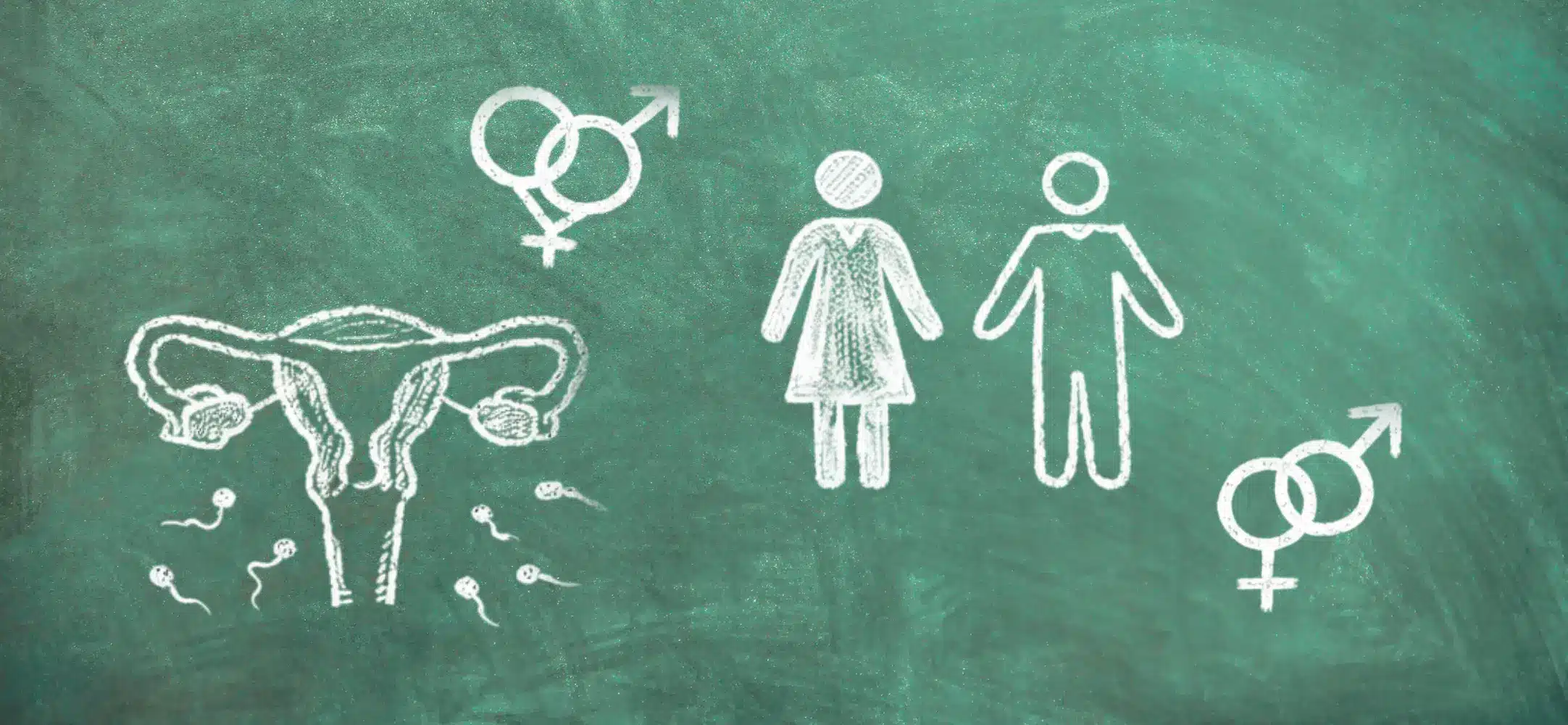
For many young Australians, sexuality education in school is one of the first places they learn about relationships, consent and sexual health. But new research led by Dr Jessie Sutherland from University of Newcastle and HMRI’s Family and Reproductive Health program suggests that what students learn and how they learn it can vary widely, leaving gaps that have real consequences for their health now and into the future.
According to the research paper’s first author, University of Newcastle PhD candidate and HMRI researcher Ava Medley, the project explores how young people experience sexuality education and what needs to change to better support their sexual and reproductive health.
“The curriculum is developed by professionals with guidance from community members and parents, but they don’t consult the students or the youth themselves,” Ava says. “That creates a little bit of a gap in what is believed to be important and what the students actually want and need.”
As part of the study, the researchers spoke with adolescents aged 15 to 18 to learn what sexuality education looks like in practice and how it could be improved.
They found that three key factors shape young people’s experiences:
- the culture around sex
- what is actually taught in the classroom
- where young people turn for information outside school.
Together, these reveal why current education often falls short of young people’s needs.
From a health perspective, the gaps are significant. Young Australians continue to experience high rates of sexually transmitted infections. In 2022, people aged 15–29 represented 69 per cent of Chlamydia cases, 48 per cent of Gonorrhoea cases, and 31 per cent of Syphilis cases in Australia.
Ava explains that if young people are not given clear, accurate and relevant information, it can directly affect their health outcomes and their ability to make informed decisions or protect themselves.
“When young people don’t have a good understanding of sexuality education, it can translate to STIs, teenage pregnancies, sexual assault and issues with identity as well,” she says. “It’s really important that understanding is established when children are quite young and progresses throughout adolescence, through puberty and into adulthood.”
While preventing teenage pregnancy has long been a focus of Australian sex education, the study found this is no longer the most pressing issue. Teen pregnancy rates have more than halved since 2011, representing only about 1.5 per cent of all births. Education that focuses almost entirely on avoiding pregnancy misses the broader picture of sexual and reproductive health.
The study also highlighted gaps in fertility education. Many adolescents have limited understanding of fertility issues and what affects reproductive health later in life.
“Untreated STIs that continue into adulthood can affect fertility,” Ava says. “If we have better education around how to prevent and treat STIs at a young age, that can reduce one of the risks of infertility later in life.”
Another finding was that young people are increasingly seeking information outside school, often online or from peers. While these sources are accessible, they are not always accurate and from a public health perspective, misinformation is a real concern.
“It’s really important to develop those critical thinking skills through sexuality education so when adolescents consume media that does discuss sexual issues and brings up sex, that they’re able to critically consume that and understand what is fictional and what is for entertainment.”
The study also examined inclusivity and consent. Many young people reported that sexuality education largely focuses on heterosexual, reproductive sex, with little discussion of LGBTQIA+ experiences. Consent education is included, but sometimes taught with vague analogies rather than clear, practical guidance. Ava emphasised that teaching the concept of consent from a young age, followed by age-appropriate explicit and realistic examples is crucial for young people’s understanding and safety.
“According to the UNESCO Comprehensive Sexuality Education Guidelines, sexuality education should be introduced at around five years old,” she says. “Of course, at five you’re not learning explicitly what sex is, but understanding basic concepts of consent such as ‘your body is yours’, slowly building on that and getting more into sexual consent as you get older.”
Strengthening sexuality education in schools is not just about knowledge. It is a prevention tool that can reduce disease, support healthy relationships, and improve reproductive health in the long term.
If the findings from this research were translated into policy and practice, Ava says she would hope to see measurable improvements in sexual and reproductive health outcomes, leading to greater confidence among young people to make informed decisions about their health.
“I would love to see a reduction in sexually transmitted infections. We have very low teenage pregnancy rates in Australia and it would be wonderful to see that remain low” she says. “Outside of physical health, I’d like to see us being more culturally sensitive of sex as a topic, rather than considering it as taboo, and being more supportive of conversations about sex in society because that’s really important if we want to break down the stigma around sex and sex ed.”
As NSW Youth Week highlights the voices and experiences of young people, this research provides a timely reminder that listening to young Australians is crucial for education that promotes health, wellbeing, and lifelong positive outcomes.